Refrigerated Container Defrost Importance: Expert Advice for Peak Performance
Do you know of the importance of defrosting your refrigerated container? Most refrigerated “reefer” container owners are unaware of refrigerated container defrost importance and regular defrosting.
Why Regular Defrosting is Crucial for Your Refrigerated Container
Have you checked your refrigerated container for ice buildup lately?
If not, you could be risking reduced efficiency, blocked airflow, and even damage to your valuable cold storage equipment.
Many reefer container owners are unaware that routine defrosting is an essential part of proper maintenance. Much like your home freezer, your refrigerated container can develop layers of frost or ice over time — and if ignored, it can lead to serious issues.
What Happens When You Don’t Defrost?
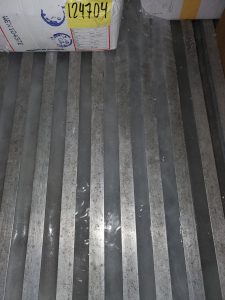
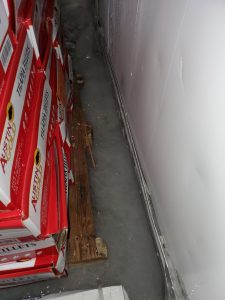
When a reefer container isn’t defrosted regularly, ice can accumulate on and under the T-floor, blocking airflow and creating unsafe conditions for your stored goods. In the photo below, you can see a real example of ice buildup that flooded and froze the floor of a container.
Why is this a problem?
• It reduces air circulation inside the container
• It forces the refrigeration system to work harder
• It can cause water damage as the ice melts
• It risks uneven temperatures that can spoil product
The solution is simple: defrost regularly and train anyone using the container to keep the doors closed when not in use. Open doors introduce warm, moist air that accelerates ice buildup.
How Often Should You Defrost?
A general rule of thumb is to fully defrost your container every 3–4 months. However, depending on usage and climate, you may need to defrost more frequently — especially if you notice any of the following:
• Ice forming along the floor or walls
• Frost buildup on the evaporator coil
• Reduced cooling efficiency
• Water pooling on the floor
Even with automatic defrost systems, manual defrosting is sometimes necessary. Think of it as giving your reefer a clean slate.
Understanding Automatic & Manual Defrost Modes
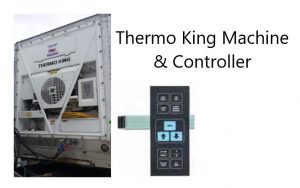
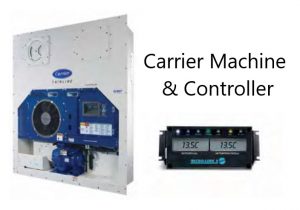
Our refrigerated containers — including Carrier and Thermo King models — come equipped with user-friendly controllers that allow both automatic and manual defrost cycles.
Here’s how they work:
• When you first plug in your container, the defrost might run every 3 hours. This is normal.
• Auto Defrost runs on a factory default schedule (often every 3–6 hours)
• You can adjust the defrost frequency to 6, 9, 12, or 24 hours via the controller
• You can also initiate a manual defrost at any time by pressing a button on the control panel
These systems are designed to make defrosting as simple as possible — but you still need to monitor the interior for ice buildup and perform full thaw cycles when necessary.
Always Use OEM Parts for Repair
If repairs are needed, we always recommend using OEM (Original Equipment Manufacturer) parts to maintain the integrity and reliability of your reefer unit. Altering or modifying components can complicate troubleshooting and reduce efficiency.
We stock most OEM replacement parts and can ship them as quickly as the next business day.
Quick Tips to Prevent Ice Buildup
✅ Keep doors closed when not in use
✅ Set a defrost reminder every 90 days
✅ Visually inspect the T-floor and evaporator coil
✅ Run a manual defrost cycle if ice is present
✅ Keep a log of maintenance and defrosting dates
We Offer 24/7, 365 Free Support
Need help with refrigerated container defrost importance and regular defrosting? Call us anytime. You’ll always speak with a real technician – no chatbots, no call centers. Press #2 for emergency support if it’s after-hours and urgent.📞Call us at 877-391-4064
